In this article
A saree is far more than six yards of beautiful cloth. It is a versatile form of dress shaped by regional weaving traditions, fabric choices, community customs and personal style. This guide explains the most important saree types, how to identify their fabrics and craftsmanship, how to drape and accessorize them, and what to check before buying or caring for one.
What is a saree, and why does it remain important?
A saree, also written sari, is a length of fabric draped around the body rather than constructed as a fixed-size dress. It is closely associated with South Asian clothing traditions, especially those of India, and its familiar contemporary form is often worn with a fitted or relaxed blouse and an underskirt. That description is only a starting point: the length, fabric, drape, accompanying garments and social meaning vary substantially from one region and community to another. Some sarees are practical cotton clothing worn during everyday work; others are carefully woven silk textiles saved for a wedding or a major family occasion.
What makes the saree extraordinary is its adaptability. The same broad garment concept can appear as a crisp cotton drape in summer, a fluid silk ensemble at a formal dinner, a nine-yard regional style, or a contemporary look with a tailored jacket. A saree is therefore better understood as a family of draped clothing practices than as a single outfit with one prescribed silhouette. A museum collection may emphasize historic weaving, while the person wearing it today may be thinking about mobility, comfort, personal taste and identity.
For a first-time buyer or wearer, the choices can feel overwhelming: Banarasi or Kanjivaram, silk or organza, ready-to-wear or traditional drape, elaborate border or minimalist finish? The clearest way to approach the subject is to separate five decisions: the textile's origin, the material, the craftsmanship, the drape and the occasion. This guide moves through those decisions in a practical order, so that readers outside India can appreciate the cultural context without needing prior knowledge of textile vocabulary.
A brief history: one garment, many evolving traditions
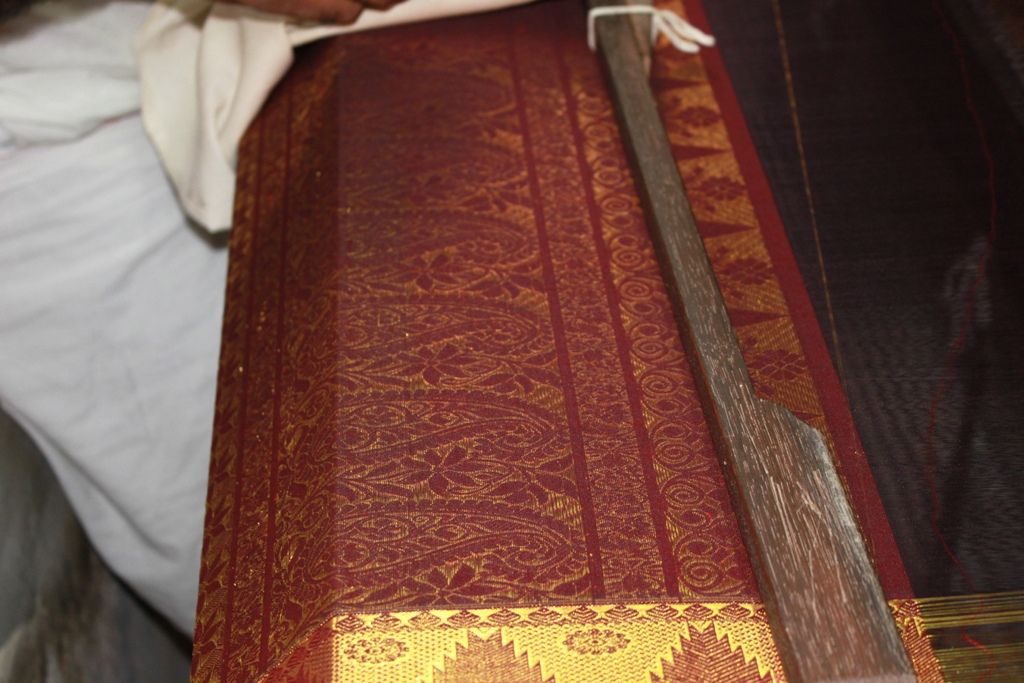
Draped garments have a long history in the Indian subcontinent, but it would be misleading to claim that every ancient garment shown in sculpture or described in literature was identical to the modern saree. Clothes, bodies, cultural norms and textile technologies changed over time. Museum collections trace centuries of sophisticated Indian cotton and silk production, with different regions developing distinctive dyes, motifs, weaving methods and trading relationships. Modern saree practices grew within that much larger history, rather than appearing fully formed in a single moment.
The Victoria and Albert Museum documents how Indian cloth has moved between daily life, ceremonial use, international trade and contemporary fashion. Its collections also reveal the range of hand-production techniques used across India. Meanwhile, the Chhatrapati Shivaji Maharaj Vastu Sangrahalaya's survey of saree variations emphasizes that drapes respond to local customs, work and occasions. In other words, the familiar pleats-and-pallu look is prominent, but not the only historically meaningful way to wear the garment.
It is worth being cautious about simplified narratives such as 'the saree has never changed for thousands of years.' Such phrases may sound respectful but flatten regional histories, overlook changes in the modern blouse and petticoat, and erase the work of contemporary weavers. Saree culture is living culture. Craft communities preserve techniques while adapting colors, fibers, motifs and products for new customers. The result is continuity with change, not a museum piece frozen in time.
Saree vocabulary: the essential terms
The body is the main fabric field that wraps around the wearer. The pallu, also called pallav or anchal in different contexts, is the decorative end commonly brought over the shoulder. Borders run along one or both lengthwise edges; their scale and technique may be important clues to a weaving tradition. A buti is a small repeated motif, while a larger buta may form a more conspicuous ornament. Zari refers to metallic-looking thread or embellishment used in borders and brocades; modern zari varies greatly in material, so a gold-toned surface is not proof of precious metal content.
Warp threads run lengthwise on a loom and weft threads pass across them. These terms matter when considering ikat, where yarns are dyed before weaving, or elaborate brocades, where the pattern is built into the fabric structure. A blouse, sometimes called a choli or ravike depending on region, covers the upper body in many modern outfits. An underskirt or petticoat supports several familiar draping styles, while some regional drapes use different supporting garments or no conventional petticoat.
The term 'handloom' describes the method of weaving, not the fabric fiber. A handloom saree can be cotton, silk, a blend or another yarn combination. Similarly, 'pure silk' describes fiber content but does not automatically establish that a garment was handwoven, ethically produced or made in a particular geographical region. Keeping these categories separate is the first step toward informed buying.
| Term | Meaning |
|---|---|
| Pallu | Decorative end draped over the shoulder |
| Border | Lengthwise edge of the textile |
| Zari | Metallic or metallic-looking decorative yarn |
| Warp and weft | Lengthwise and crosswise loom threads |
| Handloom | Method of weaving rather than fiber type |
Popular types of Indian sarees by region
Saree traditions are often identified by a place name, but the name may refer to a particular weave, technique, material combination or design identity. That distinction matters when shopping online. Two garments may share a color and border design yet be fundamentally different in how they were produced. The regional profiles below focus on identifying features and sensible styling, without treating every contemporary example as identical to historic museum pieces.
| Tradition | Associated region | Common identifying feature |
|---|---|---|
| Banarasi | Varanasi, Uttar Pradesh | Rich brocade and detailed motifs |
| Kanjivaram | Kanchipuram, Tamil Nadu | Lustrous silk and bold borders |
| Chanderi | Madhya Pradesh | Lightweight, fine weave and subtle motifs |
| Patola | Patan, Gujarat | Complex double-ikat yarn patterning |
| Paithani | Maharashtra | Decorative pallu and silk craftsmanship |
| Pochampally | Telangana | Geometric ikat patterns |
| Baluchari | Bengal | Narrative and figurative woven motifs |
Banarasi sarees: brocade and ceremonial richness
Banarasi sarees are associated with Varanasi, also called Banaras or Kashi, in Uttar Pradesh. Many celebrated examples feature silk and intricate woven designs, with floral motifs, paisleys, complex borders or zari brocade. They are widely chosen for weddings and formal celebrations because the ornamental fabric can carry an outfit without requiring heavy jewelry. A densely patterned Banarasi can feel regal; a lighter design with restrained motifs can work in more contemporary settings.
Look closely at whether the decoration is woven into the cloth or applied afterward. Ask the seller about the base silk, zari composition, weaving method and origin. 'Banarasi style' can be a useful aesthetic description, but it is not equivalent to a verified claim about production. To style a richly patterned piece, balance the design with a simpler blouse, a controlled pallu and one jewelry focal point. For international events, pairing an antique-inspired weave with understated accessories can feel especially modern.
Kanjivaram or Kanchipuram sarees: substantial silk and contrasting borders
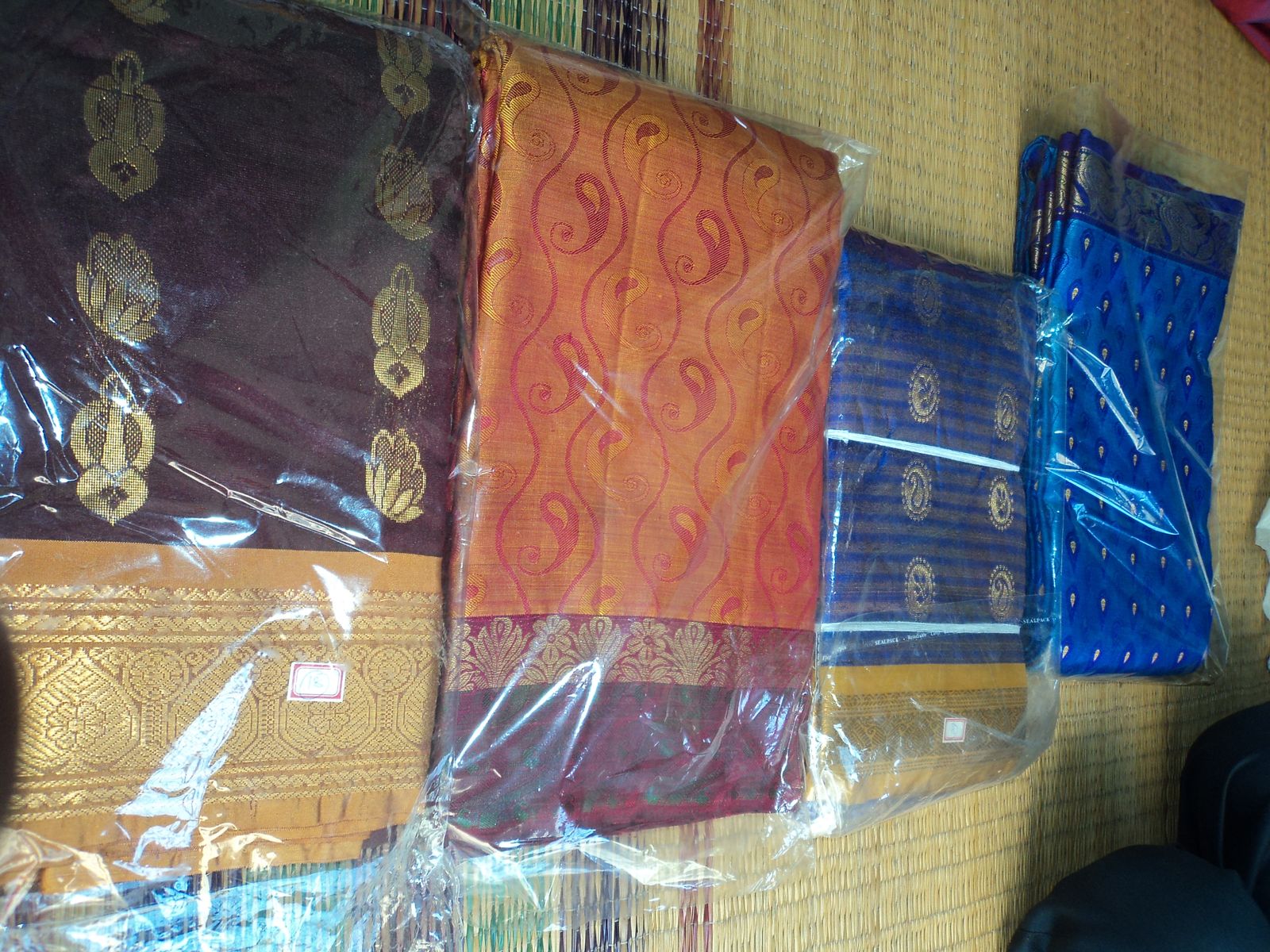
Kanjivaram sarees are closely linked to Kanchipuram in Tamil Nadu and are particularly associated with ceremonial dressing and South Indian weddings. Classic pieces are known for lustrous silk, pronounced borders, striking color contrasts and elaborate motifs. Research presented by Dastkari Haat Samiti describes skilled weaving processes using dyed silk yarn and zari, as well as the importance of the region's long-established craft knowledge.
The signature presence of a Kanjivaram does not mean every wearer needs a maximalist look. An ivory-and-gold saree can be paired with a tonal blouse and restrained jewelry, while a jewel-toned saree with a contrasting border suits an overtly festive outfit. When comparing products, ask about weight, fiber, border construction and how the garment feels when pleated. Richness in appearance is useful for a ceremony, but physical comfort matters if the wearer will stand or move for hours.
Chanderi sarees: lightness and refined ornament
Chanderi is a weaving center in Madhya Pradesh celebrated for delicate, often translucent fabrics and subtle motifs. Traditional and contemporary Chanderi pieces can use silk and cotton in different combinations; buyers should not assume a single fixed fiber recipe. The fabric often feels light and elegant, with a fine texture that makes it appealing for celebrations in warmer climates and for people who dislike heavy ceremonial dressing.
A Chanderi saree can be a convincing choice for a daytime wedding, formal lunch or festival when paired with an appropriately finished blouse. If the body is sheer, plan the blouse and underskirt colors carefully; their visibility becomes part of the finished look. Avoid stretching delicate material with too many heavy pins. The International or tourist-facing image of Chanderi as simply 'light silk' misses its richer local weaving history and the role of skilled artisans.
Patola sarees: the precision of double ikat
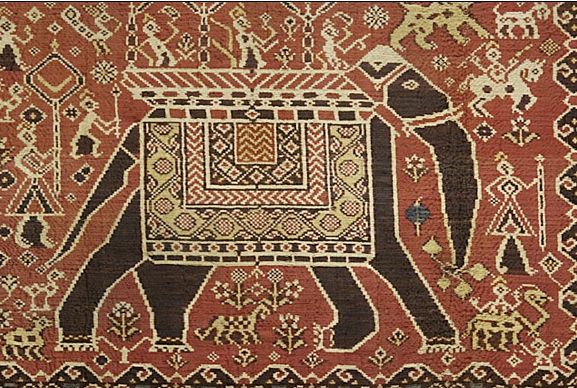
Patola is especially associated with Patan in Gujarat, where renowned double-ikat production requires the warp and weft yarns to be resist-dyed before weaving so that motifs align in the finished fabric. This is a different technical achievement from printing a geometric design onto a completed cloth. Museum accounts explain that the process is exceptionally demanding, which helps explain why traditional Patan patola pieces are prized and may command substantial prices.
Patterns can include geometric arrangements, floral forms and other stylized motifs. A patola's visual intensity is often best supported by a simple, well-cut blouse rather than additional competing patterns. Not every saree advertised as 'patola print' is double ikat, and not every ikat product is Patan patola. A responsible seller should specify whether the piece is printed, single-ikat or double-ikat, as well as where and how it was made.
Bandhani, Leheriya and tie-dyed sarees
Bandhani and Leheriya are associated with resist-dyeing traditions particularly visible in western India. Bandhani achieves patterns through tying tiny areas of fabric before dyeing; Leheriya often creates wave-like or diagonal lines using tied and folded cloth. These descriptions identify techniques rather than one universal fiber, price level or ceremonial role. Sarees using either approach range from lively everyday textiles to elaborate festive garments.
If the saree has a dense multicolored pattern, a solid blouse in a shade borrowed from the fabric provides visual balance. For a subtler outfit, try one neutral accessory and repeat only a single metallic finish. Ask whether a design is genuinely tied and dyed or digitally printed. Both can be attractive, but the production method is relevant to price, craftsmanship and care.
Jamdani, Baluchari, Paithani, Pochampally and other important traditions
Jamdani is admired for intricate motifs that appear to float within a fine woven ground; the word is used across South Asian textile traditions, so place and maker information are especially valuable. Baluchari sarees, associated with Bengal, often feature figurative or narrative imagery in their woven decoration. Museum collections preserve examples that provide a vivid account of historical fashion, visual storytelling and craftsmanship.
Paithani sarees from Maharashtra are recognized for ornate pallus and richly colored silk traditions, including stylized motifs that may feature peacocks or flowers. Pochampally ikat, associated with Telangana, uses yarn-resist patterning to create distinctive geometric effects. Sambalpuri textiles from Odisha similarly demonstrate sophisticated regional ikat traditions. Assam's muga silk has a distinctive natural golden tone, while Kerala's kasavu style is often associated with pale cloth and gold-toned borders.
This list is not exhaustive. India has numerous weaving centers, community-specific practices and regional naming conventions. Instead of trying to memorize dozens of labels, examine whether a saree's product description tells you its origin, actual fiber composition, decorative technique and maker. Those facts are more informative than an overloaded list of fashionable adjectives.
Which saree fabric should you choose?
Fabric determines how a saree falls, how readily it holds pleats, whether it feels warm or cool and how much care it needs. The same draping technique may look crisp in cotton and flowing in a lightweight silk blend. Start with climate, duration of wear and the look you want. A formal event in humid weather calls for a different compromise than an evening reception in a cool, air-conditioned venue.
Cotton is often appreciated for its breathable feel, but different weaves vary in thickness, stiffness and transparency. Linen and linen blends can look relaxed and textured, though they may crease readily. Silk is not a single drape behavior: a substantial silk brocade, a lightweight crepe and a soft silk blend respond very differently. Organza tends to preserve shape and volume, making it attractive for sculptural styling but sometimes harder for a beginner to manage. Georgette and chiffon can drape fluidly, yet very slippery examples require careful pleating and secure fastening.
When buying online, don't rely only on the phrase 'premium fabric.' Look for fiber percentages, fabric weight or feel, lining or transparency guidance, close-up images, care instructions and a reasonable return policy. If a seller only lists 'soft silk' without a composition, treat that as a descriptive label rather than an independently verified fiber specification. A fabric swatch can be valuable when ordering for a wedding party or a high-cost custom blouse.
How to choose a saree for the occasion
For an everyday outfit, prioritize movement, manageable length, easy washing and a fabric that does not require constant adjustment. For a daytime wedding guest outfit, a lightweight Chanderi, refined silk blend or colorful handwoven cotton may be more comfortable than an especially heavy brocade. For a formal evening, richer silk, distinctive borders or a carefully styled monochrome saree can create presence. For bridal use, the most meaningful choice may be linked to family or regional tradition rather than an international trend.
Consider venue and climate before following a photograph. A stiff organza saree photographed in a studio may behave differently outdoors in wind; an intricately embroidered pallu can feel heavy on one shoulder after several hours. Footwear also changes the effective drape length. Whenever possible, complete the final fitting wearing the shoes and underskirt you intend to use, then walk, sit and turn before the event.
There is no rule that red is appropriate for every Indian wedding or that pale colors cannot be celebratory. Wedding conventions vary by community, family, region and ceremony. For guests unfamiliar with the context, ask hosts about expectations before choosing colors or levels of embellishment. That question is more respectful and accurate than relying on a universal wedding-fashion checklist.
| Fabric | Typical behavior | Helpful use |
|---|---|---|
| Cotton | Breathable; drape depends on weave | Everyday or warm-weather styling |
| Silk brocade | Often substantial and decorative | Weddings and ceremonies |
| Chanderi | Often light and semi-sheer | Daytime formal wear |
| Georgette | Fluid and flexible | Soft, flowing drapes |
| Organza | Structured, voluminous | Sculptural occasionwear |
| Linen | Textured and often crease-prone | Relaxed, understated looks |
How to drape a saree: an accessible beginner method
The most familiar introductory method is commonly called the Nivi-style drape, in which the saree wraps around the lower body, forms pleats at the front and brings the remaining decorative end over a shoulder. It is only one option among many. Beginners can learn it with a lightweight, moderately grippy fabric and a supportive underskirt. Slippery satins, extremely stiff organza and very heavy bridal textiles can make a first attempt harder.
Begin by wearing the blouse and fastening an underskirt securely at a comfortable waist height. Tuck the plain starting end of the saree into the waist, then wrap it around the body, adjusting the lower edge so it falls near the intended hemline. Gather a series of front pleats of roughly consistent width and tuck them together at the waist. Arrange the remaining length as the pallu, bring it over the chosen shoulder and adjust how much fabric hangs behind you. Use a small, carefully placed pin only where needed and avoid piercing delicate decorative sections repeatedly.
A stable drape should feel secure without limiting breathing or stride. Practice walking up steps, sitting down and reaching for objects before leaving home. If the pallu pulls the shoulder backward, redistribute its weight or shorten the hanging section. A longer saree or a regional nine-yard style needs its own instructions; do not assume that the beginner method will translate directly. For a significant ceremony, an experienced local draper or tailor can be a worthwhile investment.
Regional drapes and contemporary interpretations
The saree's flexibility is visible in the different ways it is worn across India. Some regional styles emphasize a different pallu direction, some pass fabric between the legs for greater mobility, and others use distinctive pleat placement or blouse combinations. The Maharashtrian nauvari style, for example, is often associated with a longer nine-yard drape, although actual practice is diverse. Bengali, Gujarati and other named drapes are also commonly discussed, but their everyday and ceremonial forms can differ.
Contemporary styling may add a blazer, a collared shirt, a belt or a fitted top. These combinations can be imaginative, but they work best when garment construction and wearability are considered. A narrow belt can help organize the pallu yet may crease a delicate silk. A stiff blazer may obscure a beautiful handwoven border. When experimenting, begin with one modern element and let the textile remain the focus.
Ready-to-wear and pre-pleated sarees may offer welcome convenience for travelers, performers and beginners. They are not a lesser form of participation in saree fashion, but a different design format. Check sizing and closure details carefully because a pre-stitched drape often has less flexibility than an unstitched length of fabric.
Blouse designs: balancing neckline, sleeves and fabric
A blouse can completely change the character of a saree. A boat neck with clean shoulders creates a quiet, architectural silhouette; a square neck gives definition; a high neckline can suit ornate or sheer sarees; and a deep back design may be chosen for a more dramatic festive outfit. There is no universally flattering neckline, because comfort, support, body proportions and the wearer's preferences matter more than fashionable rules.
For a saree with a dense metallic border, consider a blouse with restrained surface decoration so that the textiles do not compete. For a minimal cotton saree, a printed or hand-embroidered blouse can introduce personality. Sleeve lengths can shift the mood from contemporary to formal, but they should also allow unrestricted movement. A well-fitted armhole, secure closures and comfortable seam allowances matter far more than a trendy cut photographed on a model.
If shopping for a stitched blouse, ask for a measurement chart covering bust, underbust where relevant, shoulder width, armhole, sleeve length and blouse length. Discuss whether the design includes cups, lining, back fastening or alteration allowances. For a sheer saree, the blouse and underskirt may be visible through the fabric, so treat both as part of one coordinated palette.
Jewelry, shoes and bags: how to style the complete look
The strongest saree styling often begins by deciding which element will lead. A handwoven silk with a detailed pallu can be the centerpiece, supported by small earrings and a slim bracelet. A plain solid saree may create room for architectural jewelry or a statement necklace. Mixing metal colors is possible, but repeating one finish in the jewelry and bag hardware can make an outfit feel intentional.
Shoes should be chosen before finalizing the hem. Block heels, elegant flats and certain sandals may be suitable depending on the event, but always test the drape while walking. A narrow stiletto can catch delicate fabric; a slick sole may be uncomfortable on polished floors. Pick a bag large enough for essential items without adding an awkward shoulder strap that competes with the pallu.
For a refined global eveningwear look, try a monochrome silk or chiffon saree, a tailored blouse, simple earrings and a compact clutch. For a festive Indian look, consider a contrasting blouse, traditional earrings and bangles. For a daytime event, breathable cotton or Chanderi with minimal jewelry often feels effortless. These are starting points rather than rules; personal expression is central to the saree's appeal.
Saree buying guide: authenticity, pricing and value
A saree's price can reflect fiber quality, weaving time, artisan skill, finishing, brand positioning and retail margin. A complex handwoven textile may cost more than a printed design that resembles it in photographs, but price alone is not reliable proof of authenticity. Start by asking what exactly is being sold. Is it handloom or powerloom? Which fibers are used? Where was it woven? Is the design brocaded, embroidered, tied and dyed or printed?
For an expensive heritage saree, request a detailed invoice and clear descriptions of fiber content and origin. If a product makes a protected geographical-origin claim, ask how the seller substantiates it. India's Handloom Mark program provides an official system intended to identify handwoven products, and buyers can consult its verification guidance. Such tools help evaluate specific claims; they should not become an excuse to dismiss excellent contemporary or machine-woven designs that are honestly labeled.
Study the practical details as closely as the photograph: whether a blouse piece is included, whether its fabric must be cut from the saree length, what the finished length and width are, how colors appear in daylight and whether the seller accepts returns. If the garment is for a wedding overseas, order with enough time for blouse tailoring, customs clearance, inspection and possible alterations. A responsible purchase is one that fits your event, budget and expectations, not necessarily the most expensive item in the collection.
Handloom versus powerloom: understanding the difference
Handloom and powerloom refer to different production methods. Handloom weaving involves a loom operated primarily through human effort, while powerlooms use mechanized power. A handwoven textile may display small variations, but those variations alone are not a trustworthy authentication test; modern production can reproduce similar effects, and excellent handloom work can be strikingly consistent. A closer look at provenance, seller transparency and recognized verification marks is more reliable.
Handloom buying can help sustain craft knowledge and weaving livelihoods, but marketing language should not erase the labor of other textile workers or exaggerate environmental benefits. Sustainability depends on raw materials, dyes, energy, working conditions, longevity and care—not simply whether a textile is described as traditional. Ask questions, support transparent makers and buy pieces you genuinely expect to use and keep.
Care, cleaning and storage: protecting your sarees
Always begin with the manufacturer's care label or advice from a qualified textile specialist. A sturdy everyday cotton saree and a fragile vintage silk brocade should not be cleaned in the same way. For heavily embellished pieces, antique textiles, unstable dyes or metallic threads, consult a trusted specialist before wet washing, steaming or applying stain removers. Never test a strong cleaning solution on a treasured garment simply because it worked on another piece of fabric.
After wearing a saree, allow it to air in a clean, shaded space before storage, especially if it has absorbed moisture or perfume. Keep silk and dyed fabrics away from direct sunlight, which can contribute to fading and fiber damage. Avoid storing delicate pieces under heavy stacks that create sharp, lasting creases. The Smithsonian's textile-care guidance highlights the risks posed by light, pressure, folds and unsuitable storage conditions; particularly fragile textiles may benefit from careful rolling rather than repeated folding.
Use clean, breathable protective storage materials suited to the fabric and climate. Inspect textiles periodically for moisture, insects and weak fold lines. Do not place perfume sachets, harsh moth repellents or adhesive labels directly on the saree. For an heirloom piece, document its origin and care history and photograph it in soft light; that record can become part of a family's textile archive.
Common mistakes to avoid when choosing or wearing a saree
One frequent mistake is choosing entirely by color while ignoring fabric behavior. The fabric visible in a fashion shoot may be clipped, pinned or carefully arranged for a single pose; daily movement can change its shape. A second mistake is assuming every saree labeled silk or handloom has the same quality or provenance. A third is buying an elaborate outfit without planning blouse tailoring, shoe height and underskirt fit, all of which affect the finished appearance.
Over-accessorizing can hide the craftsmanship that makes a distinctive saree valuable. Conversely, a plain saree does not need excessive ornament to look complete. Be careful with safety pins, especially on delicate silk and organza: avoid repeated piercing in the same spot and never rely on a pin to compensate for an unstable waist fastening. Finally, do not assume a single draping tutorial applies to every length or regional style.
The simplest purchasing rule is to match the saree to your actual life. If you want to wear it several times a year, prioritize comfort, workable styling and appropriate care. If it is an heirloom or ceremonial purchase, prioritize craftsmanship, provenance, meaningful symbolism and longevity. Neither approach is more authentic than the other.
How to build a versatile saree wardrobe
A useful saree wardrobe does not need to be large. Begin with one comfortable everyday drape in a shade you enjoy, one adaptable piece for celebrations and, if it fits your lifestyle and budget, one distinctive handwoven or ceremonial textile. This approach offers more value than accumulating garments that look beautiful on a hanger but never feel practical to wear.
Your first everyday piece might be soft cotton or another manageable weave. Your occasion piece could be a Chanderi, elegant silk blend or understated saree in a color that works with several blouses. The statement piece might be a meaningful family saree, a Banarasi brocade, a Kanjivaram silk or another regional weave that speaks to you. Choose accessories that can move across outfits: one pair of classic earrings, comfortable shoes, and a blouse shape you can wear confidently.
For readers living outside South Asia, accessibility often matters as much as the garment itself. Identify a reliable tailor, learn basic drape adjustments and store your textiles carefully through seasonal temperature changes. A saree is most rewarding when wearing it is enjoyable rather than stressful.
The bigger picture: craft, identity and modern fashion
Indian sarees bring together design, community knowledge, textile technology and personal expression. A woven border can reflect a regional tradition; a family hand-me-down can carry stories no showroom can reproduce. At the same time, modern designers and everyday wearers continue to reinterpret the garment, creating new outfits with contemporary blouses, different footwear and fresh ideas about occasionwear.
It is possible to admire a saree's beauty while asking useful questions about labor, origin, marketing and preservation. The most thoughtful fashion coverage treats weavers as skilled makers rather than anonymous figures in a romantic story, and it distinguishes documented craft facts from exaggerated claims. As the Victoria and Albert Museum's textile research shows, India's textile traditions are not just decorative artifacts; they remain part of a living global fashion conversation.
If you are beginning your saree journey, focus on one good piece, learn what makes it distinctive and practice wearing it in a way that suits your body and daily life. The best saree is not always the rarest, the heaviest or the most heavily embellished. It is the one whose fabric, drape, craftsmanship and meaning come together when you wear it.
Frequently asked questions
- What is the difference between a saree and a sari?
- They are alternate English spellings of the same general draped garment. The words do not indicate different fabrics, prices or regional styles.
- Which saree is easiest for a beginner to wear?
- A lightweight but not overly slippery cotton, silk blend or similar manageable weave is usually easier to pleat than very stiff organza or slippery satin. Comfort and drape technique matter as much as fiber.
- What is a saree pallu?
- The pallu is the decorative end of the fabric, often arranged over a shoulder. Its position and styling differ across regional and contemporary drapes.
- Are Banarasi and Kanjivaram sarees the same?
- No. They are associated with different weaving centers and traditions: Banarasi with Varanasi in Uttar Pradesh, and Kanjivaram with Kanchipuram in Tamil Nadu. Materials and design details vary by piece.
- How much fabric is in a saree?
- Lengths vary by region and draping method. Many familiar modern sarees are sold around 5.5 to 6 metres, while longer regional styles exist. Always check the listing rather than assuming one fixed size.
- Can a saree be worn without a traditional blouse?
- Contemporary styling can use different upper garments, including shirts and jackets, provided the ensemble is comfortable, secure and appropriate for the occasion. Traditional practices also vary.
- How can I tell whether a saree is handwoven?
- Ask for verifiable provenance and weaving details. India's official Handloom Mark scheme may help verify applicable claims. Small irregularities and higher prices alone do not prove handloom origin.
- Can silk sarees be washed at home?
- Not all. Follow the garment's care instructions; expensive brocades, metallic threads, delicate dyes or heirloom sarees often require specialist advice.